Alert Barking: Start here first
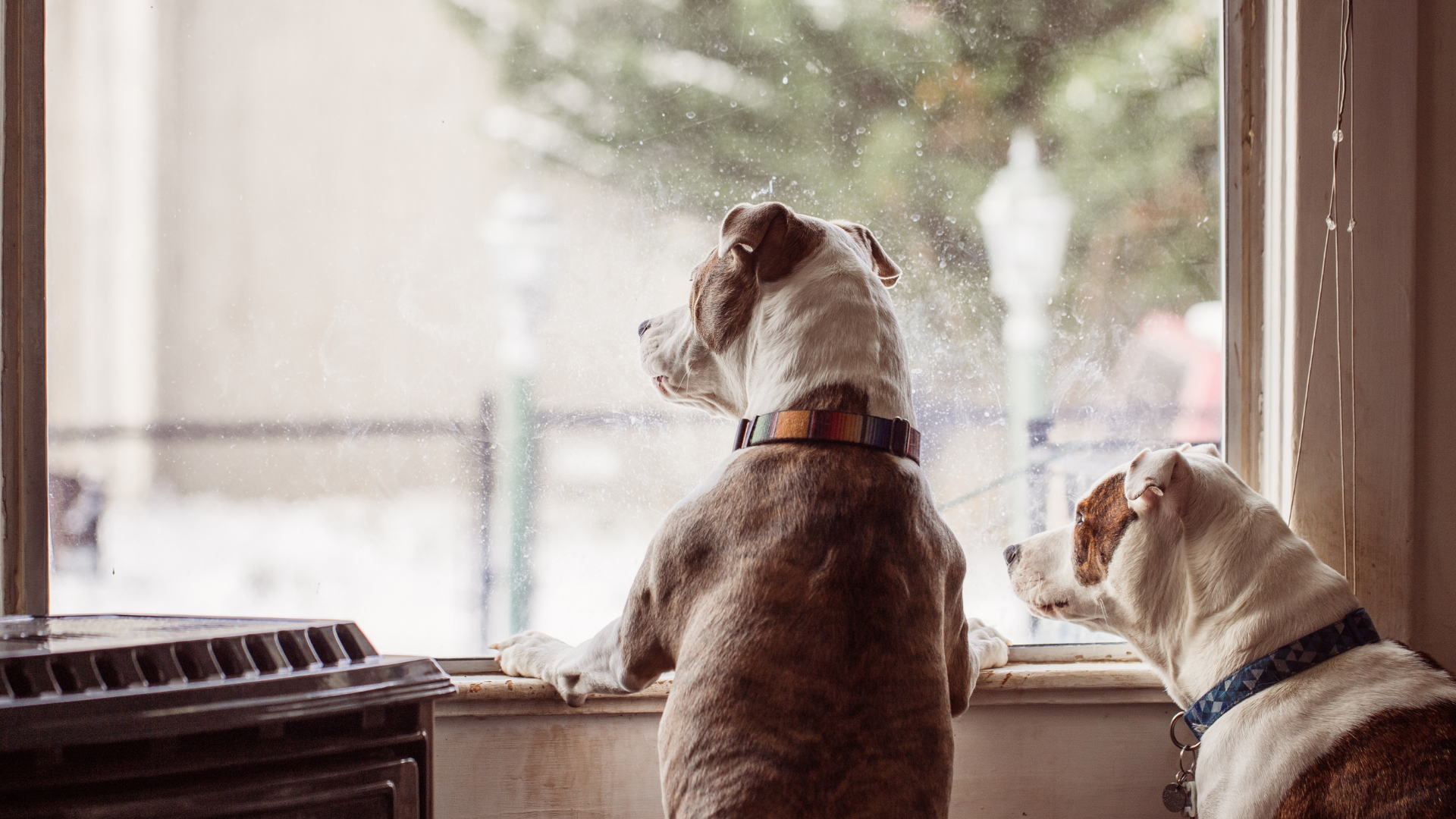
When a client tells me their dog barks at things it sees out the window, I don’t start by trying to stop the barking itself. Barking is just the visible behavior. The important question is why the dog feels compelled to do it in the first place. Before we work on the barking directly, I evaluate and address several foundational areas.
1. Behavioral Assessment
The first step is gathering context about the dog and the behavior. Window barking can come from many motivations: territorial drive, prey drive, frustration, anxiety, boredom, or habit. Here's the information I collect first:
Dog profile:
-
Age
-
Breed or mix (herding, guardian, terrier, etc.)
-
Energy level and genetic tendencies
-
Previous training experience
Certain breeds are much more prone to window surveillance:
-
Herding breeds (Aussies, Border Collies) often react to movement
-
Guardian breeds (Shepherds, Mastiffs) often respond to perceived threats
-
Terriers often react to prey or fast motion
Exercise and enrichment:
-
Daily physical exercise
-
Mental work or training
-
Structured play vs. passive activity
A dog that is understimulated often creates its own job, and window watching becomes that job.
History of the behavior
-
When did it start?
-
Has it escalated?
-
Is it constant or situational?
Triggers - What exactly causes the barking?
Examples:
-
Dogs walking by
-
Delivery drivers
-
Squirrels or birds
-
Cars
-
Children
Frequency and rehearsal - This is critical.
If the dog:
-
Has access to the window all day
-
Barks dozens of times per day
-
Successfully drives stimuli away
Then the dog is rehearsing the behavior constantly, which strengthens it neurologically and the habit loop becomes very powerful.
2. Environmental Management
The environment often creates the problem before the training even begins. If a dog has unlimited access to windows, they effectively become a 24/7 neighborhood surveillance guard. These are the things I evaluate in the home:
Access to windows
-
Can the dog sit at the window all day?
-
Are there multiple windows the dog patrols?
Visual triggers
-
Busy sidewalks
-
Other dogs passing
-
Wildlife
-
Neighborhood activity
The more the dog sees, the more opportunities they have to react. Before we train, I often reduce the opportunity for rehearsal by implementing management strategies.
Examples include:
-
Frosted window film
-
Closing blinds
-
Moving furniture away from windows
-
Baby gates to block certain rooms
-
Using crates or designated resting areas
This isn’t the solution — it’s preventing the dog from practicing the problem behavior thousands of times while we work on the underlying issues.
3. Fulfillment of Drives
Many dogs bark at windows because they are "under-employed."
Dogs have drives that need expression:
-
prey drive
-
chase
-
work drive
-
guard instincts
-
social engagement
If those drives are not fulfilled, the dog will create an outlet. Window watching becomes a perfect substitute job. Common areas of unmet needs I see are:
Physical exercise
-
Short leash walks only
-
No free movement
-
No outlets for speed or endurance
Missing structured play
-
Tug
-
Fetch
-
Flirt pole
-
Controlled chase games
Training engagement - Dogs need mental work, not just physical exercise.
Examples:
-
obedience sessions
-
shaping games
-
scent work
-
problem-solving tasks
Job-based outlets
For high-drive dogs, I often introduce:
-
tracking
-
scent work
-
disc
-
obedience drills
-
structured play sessions
When a dog’s drives are fulfilled, their need to "self-employ" at the window drops dramatically.
4. Leadership and Structure in the Home
Another commonly contributing factor is a lack of structure around space and behavior. If the dog has never been told no for any behavior they've committed in the past, they will not be receptive to it now. Dogs that have lived in a household that does not hold them responsible for pushing limits or boundaries will not be receptive to that feedback in the escalated situation of high arousal they are in while barking.
Signs of this I note when visiting a client's home are
-
The owner is unable to get the dog's attention by name, meaning the owner has no importance or value over what the dog is choosing to do at a given time
-
Owner cannot get the dog away from them, jumping, crawling in lap, play biting etc...
-
Dog demands attention, affection or resources by intruding into space or barking
-
Dog feels responsible for alerting
In these cases, there are no limits or boundaries imposed on the dog and enforced by the owner or household. The dog is able to do as it pleases, regardless of the desires of the humans.
Structure and foundational skills are another areas I evaluate that will determine if the dog is equipped to manage it's own impulse to bark.
Access to space
The dog should not have unlimited permission to go everywhere and anywhere at its pleasure until it has demonstrated it will respond to enforced boundaries if/when needed.
Impulse control
I look at whether the dog understands:
-
waiting
-
settling
-
holding a position
Place training - This is an obedience skill I train in dogs with barking issues to develop the skill of settling, resisting impulses and learning boundaries set by their owner. Teaching the dog to settle on a bed or mat also gives them an incompatible behavior an owner can cue to prevent the dog from scanning windows.
Relationship and engagement
A key question I am seeking an answer for is:
"Does the dog look to the owner for direction, or do they make their own decisions?"
Dogs that operate independently often develop these kinds of behaviors as they take it as their responsibility to respond.
5. Nervous System State / Arousal
Another major contributor is chronic arousal.
Dogs that bark at windows often live in a constant heightened state of alertness.
This can come from:
-
repeated triggering
-
lack of decompression
-
insufficient rest
-
frustration
Repeated reactions can also cause physiological responses:
-
adrenaline spikes
-
cortisol buildup
-
sensitization to stimuli
Over time, the dog becomes primed to react even faster because their system is set in reaction mode. Small triggers all of sudden start producing large emotional responses. Signs of chronic arousal include
-
pacing
-
scanning windows
-
difficulty settling
-
explosive reactions to small stimuli
-
poor impulse control
Before addressing barking, I often focus on helping the dog learn how to relax and decompress.
6. Training Foundation Before Addressing Barking
Only after the previous areas are addressed do I start building the skills needed to handle window triggers. The dog MUST HAVE foundational behaviors first:
Place command
The ability to go to a bed and settle when asked.
Name response
The dog must respond when directed at the window.
Disengagement
The ability to look away from stimuli and reorient to the handler.
Handler focus
Dog chooses engagement with the owner instead of environmental stimuli.
Reinforcement markers
The dog understands:
-
reward markers (clicker/“yes”)
- Punishment markers ("eh-eh", "no")
-
release marker
-
clear feedback
Without these skills, asking the dog to stop barking is like asking them to solve a college-level math problem without a calculator, formula or math education past kindergarten. Window barking rarely exists in isolation. It is usually the result of a combination of:
-
rehearsed territorial behavior
-
environmental reinforcement
-
unmet drives
-
lack of structure
-
chronic arousal
-
missing foundational training
When those underlying factors are addressed first, the barking itself becomes much easier to resolve. The dog then has the skills, practice and connection to their owner to be able to stop barking when told and calm themselves down.
